

What are high school research programs?
A high school summer research program is a unique opportunity for students to engage in hands-on research and exploration within their chosen academic fields. These programs are typically offered by universities, research institutions, and organizations. Summer programs are usually co-ed, residential programs that range anywhere from 6-8 weeks and often culminate in a final project or presentation. Participating in a summer research program demonstrates a student’s commitment to academic excellence and passion for their chosen field, making it a valuable addition to college applications. It can significantly enhance the chances of being accepted to competitive colleges and universities while offering a transformative experience that sets students apart from their peers. As exciting summer research programs as a high school student can be, most respected programs are often very competitive (think <10% acceptance rate). Here’s a guide on how to craft the best program application:
To start, most programs require the following:
- Grades transcript
- Test Scores
- Letters of recommendation
- Supplementary essays / personal statement
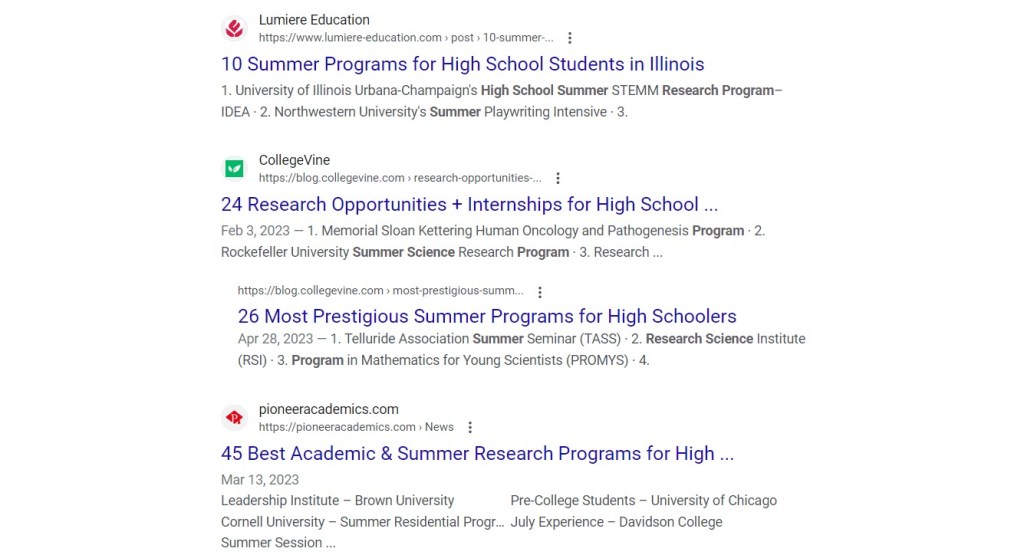
- Research Available Programs: Look for summer research programs at universities, research institutions, and organizations. Utilize online resources, directories, and databases that specifically cater to high school students seeking research opportunities.
- Check Eligibility Criteria: Each program will have specific eligibility requirements, such as grade level, age range, coursework completed, and GPA. Make sure you meet all the prerequisites before proceeding with the application.
- Start Early: Begin your search for summer research programs well in advance. Many applications have deadlines several months before the start of the program, so give yourself enough time to research and prepare. Most summer programs open their applications at the end of the year (Oct-Nov) and are due at the beginning of next year (Jan-Feb).
- Prepare Your Resume/CV: Create a well-organized resume that highlights your academic achievements, extracurricular activities, volunteer work, leadership experiences, and any previous research-related involvement. Some programs will ask for a resume, and some won’t. Make sure you know which programs ask and don’t ask to save time.
- Request Recommendation Letters: Many programs require letters of recommendation from teachers, mentors, or community leaders. Ask for letters from individuals who can speak to your academic abilities, research potential, and enthusiasm for learning.
- Write a Stellar Personal Statement: Craft a compelling personal statement that showcases your passion for the subject, explains why you want to participate in the program, and demonstrates your suitability as a candidate. Tailor your statement for each program you apply to. For those that ask for supplementary essays, make sure you start drafting and writing a few months before the deadline.
- Check for Financial Assistance: Some summer research programs may come with associated costs. If they do, they will also most likely offer financial aid or scholarships, so make sure to research what they offer.
- Submit Your Application: Complete the application accurately and submit all required documents before the deadline. Double-check that all materials, including transcripts, recommendation letters, and essays, are included.
Extra tips:
- Stay Organized: Keep track of the programs you’ve applied to, their deadlines, and any communication with program coordinators. An organized approach will help you manage the process effectively.
- Consider Backup Options: Apply to multiple programs to increase your chances of acceptance. Have a few backup options ready in case you’re not accepted to your first-choice program.
- Prepare for the Program: If you get accepted, familiarize yourself with the program’s schedule, requirements, and any preparations you need to make before the start date.
- Make the Most of the Experience: During the program, actively engage in research, ask questions, seek mentorship, and network with peers. Embrace the learning opportunities and make the most of the experience.
- Follow Up and Express Gratitude: After the program concludes, send thank-you notes to mentors, program coordinators, and anyone else who contributed to your experience. Networking and expressing appreciation can lead to future opportunities.
 Scientia Research