
Overview
Cell culturing is a fundamental technique used to grow and study cells in a controlled laboratory environment. It involves the cultivation of cells outside their natural environment, providing researchers with a controlled setting to study cell behavior, responses to various treatments, and cellular interactions. Cell culture assays are invaluable in understanding cell physiology, cell signaling, drug responses, and disease mechanisms. They allow researchers to investigate cell growth, viability, migration, and other cellular processes under different experimental conditions. They find extensive applications in areas such as cancer research, drug development, regenerative medicine, and toxicology studies, playing a critical role in disease modeling, drug screening, and exploring the impact of genetic or environmental factors on cell behavior.
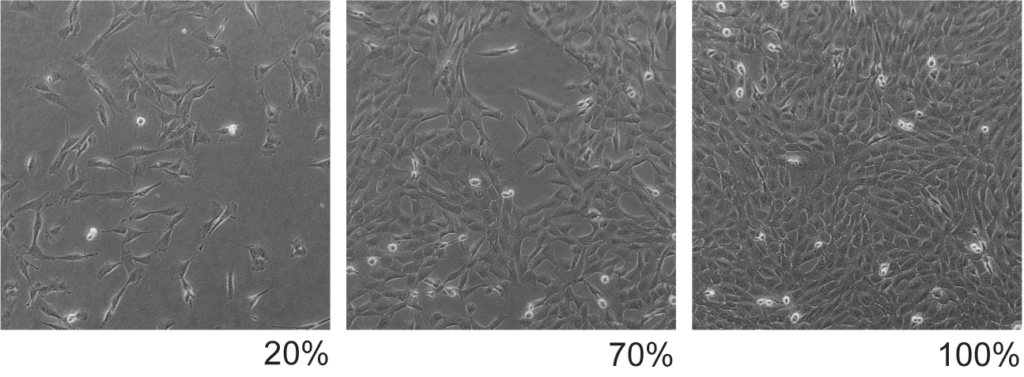
Materials and Equipment in cell culturing:
To perform cell culture assays, you’ll need several key components:
- Cell Lines or Primary Cells: The cells of interest, either from established cell lines or isolated from tissues.
- Culture Medium: A nutrient-rich solution containing essential growth factors, hormones, and other supplements to support cell growth.
- Cell Culture Flasks or Plates: Containers where cells are cultured, providing a stable environment for cell attachment and proliferation.
- Incubator: An apparatus to maintain optimal temperature, humidity, and gas concentration for cell growth.
- Cell Counting and Viability Assays: Tools and reagents to determine cell number and assess cell viability.
- Microscope: To observe cell morphology and monitor cell health during the culture process.
Basic Steps in cell culturing:
Here’s a simplified outline of the cell culture assay process:
- Cell Seeding: Cells are seeded onto culture flasks or plates at an appropriate density to ensure optimal growth and confluence.
- Cell Growth and Maintenance: Cells are incubated in a controlled environment, providing them with the necessary nutrients and conditions for growth and proliferation.
- Cell Treatment: Cells may be exposed to different substances, drugs, or stimuli to study their responses and behavior under specific conditions.
- Cell Imaging and Observation: Microscopy is used to observe cell morphology, monitor cell health, and track changes during the culture period.
- Cell Viability Assessment: Cell viability assays are performed to determine the number of viable cells and assess cell health.
- Data Collection and Analysis: Data on cell growth, viability, and other experimental outcomes are collected and analyzed, providing insights into the effects of treatments or conditions on the cultured cells.
Cell culturing is a cornerstone of modern biomedical research, offering a controlled and reproducible platform for investigating various cellular processes.
 Scientia Research