Categories
guides

Conducting bioinformatics research

Regardless of whether you’re an experienced researcher or a newcomer to this field, this comprehensive guide will walk you through the vital steps for conducting bioinformatics research effectively.

Step 1: Define Your Research Objectives

At the outset of your bioinformatics research journey, it is imperative to establish clear research objectives. Begin by formulating the scientific questions you aim to answer. What questions do you want to answer? What are you looking to solve? What problems are you looking to address? Articulate your specific research objectives and the outcomes you anticipate achieving.

Step 2: Acquire Relevant Skills and Knowledge

Gain an in-depth understanding of biology, encompassing the biological systems and processes pertinent to your research. Familiarize yourself with genetic concepts and genome sequencing techniques, which form the bedrock of many bioinformatics projects. Delve into computer science, where mastering programming languages such as Python and R is indispensable. Additionally, acquire proficiency in data analysis and familiarize yourself with a diverse array of bioinformatics tools.

Step 3: Access Data Resources

One of the foundational components of bioinformatics research involves working with biological data. To access pertinent data resources:

Rely on databases such as GenBank, NCBI, and Ensembl, each offering extensive repositories of genetic and genomic data. Explore data repositories provided by institutions like the European Bioinformatics Institute (EBI) or the National Center for Biotechnology Information (NCBI) (guide on how to navigate these sites coming soon!).

Step 4: Select Appropriate Tools and Software

Selecting the right tools and software is imperative for successful bioinformatics research. Opt for tools and software that align with your research requirements: Bioconductor is an invaluable resource for genomics data analysis in R. Biopython provides a comprehensive toolkit for computational biology in Python. BLAST, a widely-used tool, facilitates sequence similarity searches. Tailor your choice of phylogenetics software, whether it be MEGA, RAxML, or BEAST, to the specific demands of your research.

Step 5: Data Collection and Preprocessing

Gather the data needed for your research and prepare it for analysis: Initiate the process by meticulously cleaning and formatting your data. Subsequently, expunge duplicates, contaminants, or sequences of inferior quality to ensure data integrity. Normalize data, if required, to achieve consistency in your dataset.

Step 6: Data Analysis and Visualization

Data analysis is the core of bioinformatics research and encompasses several crucial components:

Embark on your data analysis journey by deploying descriptive statistics to gain a comprehensive understanding of your dataset. Apply relevant algorithms such as sequence alignment, sequence assembly, or clustering, depending on the objectives of your research. You might want to do some further research into each of these analyses and which one suits your personal project. Enhance your research by visualizing your results through plots, graphs, and interactive tools that facilitate comprehension.

Step 7: Interpret and Draw Conclusions

Interpretation of research findings is essential in bioinformatics research: Thoroughly analyze your results in the context of your research objectives, ensuring they are in alignment. Frame meaningful conclusions and hypotheses based on your findings. Discuss the implications and significance of your research, emphasizing how it contributes to the broader understanding of your research domain.

Step 8: Document Your Work

Comprehensive documentation is pivotal to the success of your bioinformatics research:

Maintain a research notebook to meticulously record your progress, insights, and observations. Utilize version control for both code and data to keep an organized and traceable record of your research. Document data sources, analysis methods, and results thoroughly to ensure reproducibility and transparency in your work.

Step 9: Seek Funding and Resources

Bioinformatics research often demands computational resources and support. Explore opportunities to secure funding:

Look into grants, scholarships, and funding opportunities tailored to your research area. Seek access to high-performance computing clusters or cloud computing resources to facilitate your computational needs.

Goodluck!

Categories
guides

The complete guide on how to publish high school research

What does it mean to have your research published?

Having your research published refers to the process of formally presenting your project or scientific study in a publicly accessible medium, (most typically a journal). This publication process involves submitting your work to a peer review, where experts in relevant fields assess the quality, validity, and significance of your research. If your work meets the criteria of the reviewing process, it is accepted for publication, making it available to the broader academic community and contributing to the advancement of knowledge in your chosen area of study. Published research provides a source of reference for other scholars, and establishes your work as part of the established literature in the field.

As a high schooler, publishing not only allows you to share your findings with a wider audience but also provides you with a tangible accomplishment that can be highlighted on college applications and resumes.

What types of research can get published?

Almost any kind of research can be published—usually original research projects or literature review articles. The more original your research is, however, the wider your range of options are for publication locations. If you intend on writing a literature review, for example, it is much more difficult to be published since it requires no original data collection or experimentation. If you are conducting original experimentation/analysis, then the bar for publication is lower as original experimentation is often higher in difficulty.

Impact factors of a journal

The most common way to publish research (beyond high school) is in an academic journal. All journals have a Journal Impact Factor (IF or JIF), a metric used to assess the significance and influence of a research journal within its field of study. The number itself provides a quantitative measure of how often articles published in a specific journal are cited by other researchers over a certain period.

Here’s how it works:

  1. Citations: The number of times articles from a journal are cited by other researchers in their own work is counted over a specific period, usually a year. This is an indicator of how frequently the research published in that journal is being referred to and built upon by the broader academic community.
  2. Calculation: The Impact Factor is calculated by dividing the total number of citations a journal received in a given year by the total number of articles published by the journal in the previous two years.
  3. Interpretation: A higher IF indicates that articles published in that journal tend to be cited more frequently by other researchers. Journals with higher IF are generally considered to have a greater influence and significance within their field.

Researchers often consider IF as one of many factors when choosing where to submit their work. They also use it as a tool to assess the standing of journals within their field and to determine which journals have a higher likelihood of providing visibility to their research. However, it’s crucial to remember that IF is just one of several metrics and should be considered in context with other factors such as the journal’s reputation, scope, and alignment with the researcher’s work.

So, how do you get published?

1. Student science journals

Student science journals are journals that cater to and are specifically tailored to publishing research conducted by high school students, usually characterized by a stringent peer-review process. These journals adhere to a comprehensive peer-review system, ensuring the credibility and quality of the research they publish. They maintain specific criteria for accepting papers, varying from embracing novel data analyses to considering literature reviews. Unlike journals with predetermined publication slots, these peer-reviewed journals do not have a fixed number of spaces allocated. However, they maintain a discerning standard, carefully evaluating the nature of research they admit.

Keep in mind that while these journals still value quality and rigor, they are often slightly more forgiving of the limitations of high school research, as they understand the difficulties and limitations of high school research. However, your work should still be well-researched, well-written, and contribute something meaningful to the academic conversation.

When considering high school research journals, make sure to carefully review their submission guidelines, deadlines, and specific focus areas. Adhering to these requirements will increase your chances of having your research accepted and published in a reputable outlet.

2. University or research institution collaboration

The majority of high school research projects are conducted under a professor researcher at a university lab, usually either through cold emailing or structured summer programs. These opportunities offers high school students an exceptional opportunity to expand their research horizons and tap into a wealth of resources beyond their school’s confines. Students have access to cutting-edge laboratories, advanced equipment, and expert mentors who possess a wealth of experience in their respective fields—resources that are usually not be readily accessible within a high school setting (hence why these projects are generally considered more advanced and original).

University lab research is often the most sought after because the guidance and mentorship provided by the lab professors can significantly enrich your research journey. They can offer valuable insights into experimental design, data analysis techniques, and the overall research process. Their feedback can help refine your approach, ensure methodological rigor, and align your work with industry standards.

Secondly, these projects often open doors to more formal publication opportunities. Research institutions frequently have established relationships with academic journals, granting you exposure to platforms that are not typically accessible to high school students. This exposure not only enhances the credibility of your work but also introduces you to a wider network of professionals in your chosen field. Collaborative research projects might even lead to co-authorship with experienced researchers, solidifying your place in the academic community and enhancing your potential for future research endeavors.

3. School or local publications

School or local publications offer a welcoming platform for high school students to share their research findings and contribute to their educational or community ecosystem. These publications typically embrace a supportive and nurturing approach, recognizing the unique perspective of young researchers. When you submit your high school research to these platforms, they consider the value your work adds to the local or school community, appreciating the effort and enthusiasm you’ve invested in your study.

While the review process might not be as stringent as in academic journals, school or local publications still maintain standards of quality and clarity. They ensure that your research is well-communicated, understandable, and adheres to ethical guidelines. Additionally, the leaders of the publications might employ editors who provide feedback and suggestions to enhance your work before publication, which can be a valuable learning experience.

Publishing in school or local publications not only gives you a tangible achievement to celebrate but also instills a sense of pride within your school or community. It’s a stepping stone that prepares you for future academic pursuits while celebrating your current accomplishments.

4. Research competitions


Participating in research competitions provides high school students with a dynamic avenue to showcase their research endeavors and potentially lead to the publication of their work. These competitions, often organized at local, regional, national, or even international levels, offer a platform where students can present their research projects to a panel of expert judges and peers from diverse backgrounds (to learn more about these competitions, visit our partner’s website for more excellent guides!). Winning or even participating in such competitions not only validates the quality of your research but also draws attention to the significance of your findings.

Research competitions are well-aware of the challenges and limitations that high school students might face when conducting research. As such, they usually emphasize the process, creativity, and effort invested in your work, rather than focusing solely on rigid academic standards. This approach recognizes that research conducted at the high school level might be exploratory and innovative, paving the way for unconventional yet impactful findings.

While some competitions offer cash prizes or scholarships, others provide opportunities for publication. Certain competitions are affiliated with journals, magazines, or platforms that specialize in showcasing research conducted by young scientists. Winning or placing in these competitions might lead to invitations to have your research published or featured in these outlets, exposing your work to a wider audience.


Categories
informationals

Field vs. Laboratory Research

Research is the cornerstone of expanding our knowledge and understanding of the world around us.

Field research is the collection of raw data outside a laboratory, library, or workplace setting. It aims to capture the authenticity of real-world interactions, making it particularly suitable for studying social behaviors, ecological systems, and cultural dynamics. Researchers gather data through methods like observations, surveys, interviews, participant observation, and ethnography. This approach provides a holistic perspective on the studied phenomena, shedding light on various involved factors and enabling exploration within their natural settings.

On the other hand, lab research takes place within controlled laboratory environments. This controlled setting enables researchers to manipulate variables precisely and systematically, facilitating the establishment of cause-and-effect relationships. Controlled experiments, simulations, and controlled observations are commonly employed in lab research. This approach is well-suited for isolating specific variables, making precise measurements, and conducting experiments with a focus on internal validity.

The advantages of field research

Field research comes with notable advantages. It allows researchers to observe phenomena in their natural complexity, capturing interactions that might be difficult to replicate in a lab setting (ex. archaeology, sociology, any kind of cultural or social construct, etc.). The findings often possess high ecological validity, making them applicable to real-world situations. Yet field research has its own limitations. The lack of control over external factors can introduce confounding variables, and the process can be resource-intensive and time-consuming due to logistical challenges. It can be hard to isolate singular phenomena when there are dozens of other factors accounted for but not managed.

The advantages of lab research

The strength in lab research is in its ability to control variables and minimize external influences, resulting in enhanced internal validity. Replicating experiments is relatively straightforward, increasing the confidence in the findings. Factors are accounted for and controlled, allowing for the elimination of most confounding variables. Nonetheless, lab research has its own set of limitations. Controlled environments might oversimplify the complexities of real-world phenomena, potentially leading to demand characteristics or a lack of ecological validity. Sometimes these confounding variables are integral for the phenomena to happen, and without these variables at play, the experiment itself may be oversimplified. Moreover, some phenomena, particularly those deeply embedded in natural contexts, cannot be accurately studied in lab settings.

What kind of research am I doing for my project?

Determining the appropriate approach depends on the research objectives, the nature of the studied phenomena, available resources, and ethical considerations. Field research shines when exploring intricate social interactions, studying ecosystems, and investigating cultural phenomena. Meanwhile, lab research is valuable for establishing causal relationships and isolating variables under controlled conditions.

In practice, researchers often blend these approaches to maximize their insights. Field observations can inform the design of lab experiments, while lab findings can be tested and validated in real-world scenarios.

Considering cost and resources, field research often demands more due to travel, equipment, and logistical requirements. On the other hand, lab research can be cost-effective in terms of equipment and personnel, but it might involve significant initial setup.

Validity and reliability are key considerations. Field research prioritizes external validity and naturalistic settings, possibly at the expense of internal validity. In contrast, lab research emphasizes internal validity while potentially sacrificing ecological validity.

Categories
how to

Guide to having a good lab notebook

In any kind of lab or research setting you’re in, it’s imperative you have a good, coherent lab notebook to record your data and findings. Here’s how to develop a good lab notebook:

A well-kept lab notebook provides detailed record of experiments, observations, and results. Bad lab notebooks can often result in false or missing data, incorrect interpretations, or faulty experiments, so it’s extremely important to keep a good notebook. In this comprehensive guide, we will outline essential practices to create and maintain a good lab notebook.

  1. Choosing the Right Notebook: Most labs will provide you with a lab notebook, which is usually more of a notepad with graph paper. You can also use your own notebook, but be sure to select a high-quality notebook with numbered pages and a durable cover. Consider using notebooks with grid or graph paper for neat drawings and calculations.
  2. Lab Notebook Guidelines: Familiarize yourself with any specific guidelines or requirements set by your institution or research supervisor, if they have a specific way they’d like you to record data or any kind of formatting. Adhering to these guidelines ensures consistency among lab members and simplifies data verification and auditing.
  3. Each Lab Entry: Always begin each lab notebook entry with a title that briefly describes the experiment or task, the date, and any other relevant information depending on your experiment.
  4. Record in Real-time: Document the preparation of samples, including concentrations, dilutions, and any modifications made. Record experimental procedures, measurements, observations, and results directly in the lab notebook in real-time. This helps to avoid errors and ensures accuracy and completeness of information. Make sure to include any calculations as well in case you need to look back on it. Make sure to note experimental conditions—details of experimental conditions such as temperature, humidity, or any other parameters that might influence the results.
  5. Detailed and Clear Entries: Write in clear and concise language, avoiding ambiguous terms (and generally abbreviations too, but they are still allowed as long as you’ve clearly clarified them beforehand). The main rule of thumb for keeping a good notebook is to include sufficient detail to enable someone else, who has no idea what you’re project is on, to replicate your work if necessary.

Extra tips:

  • Use of Pen and No Erasing: Write in pen to prevent alterations or erasing of entries. If an error is made, draw a single line through the mistake, initial it, and provide the correct information nearby.
  • Include Relevant Diagrams and Graphs: Use diagrams, sketches, and graphs to complement written descriptions. These visual aids make it easier to understand complex procedures and results.
  • Incorporate References: When applicable, include references to relevant literature or external sources that informed your experimental design or provided critical information.
  • Document Observations and Unexpected Results: Record all observations, even if they appear insignificant or do not align with your hypothesis. Unexpected results may be valuable in understanding potential sources of error or for future investigations.
  • Regular Review: Regularly review your lab notebook. Reviewing your entries can help identify any errors or omissions, while signing confirms that you stand by the data recorded.
  • Share and Collaborate: Encourage open communication and collaboration within your lab. Sharing your lab notebook with colleagues can foster constructive discussions and improve the quality of research.
  • Keep it Organized: Organize your lab notebook sequentially and use tabs or bookmarks to easily locate important sections.
  • Back-Up Data: Regularly back up your lab notebook data, either in digital or physical form, to safeguard against loss.

Did you know? A well-maintained lab notebook is not only a crucial scientific tool but also a legal document that can be used in patent applications and intellectual property disputes.

Categories
how to

How to: prepare for your first day in the lab + what to expect

So, you’ve got the position – congratulations!

Preparing for your first day in a research lab as a high school student can be both exciting and nerve-wracking: there will be a lot of questions and information thrown at you. Here’s a guide on how to prepare for your first day and what to expect coming in.

Before your first day

Your first day will most likely be agreed upon a few weeks after your PI’s agree to have you, so here’s what you can do in the time before you go in:

  1. Review basic science concepts. Brush up on fundamental science principles related to the lab’s field. For example, if you’re doing neuroscience, you’ll want to know basic brain function and anatomy. If you’re going into bioinformatics, you’ll want to know some basic biology and programming skills. This will help you understand discussions and experiments more easily without having to spend too much time catching up on basic ideas. But, don’t worry if you don’t understand everything! It’s important to note that your PI’s are not expecting you to know everything on the first day. You’re going into the lab to learn, not to review!
  2. Review the lab’s most recent publications. Their lab website will most likely have a link to all of their downloadable publications, so you’ll want to download them and review their most recent papers. You don’t have to understand every minute concept in the paper, but it’s good to get a general grasp on their latest projects and areas of interest. If they don’t have a link to their publications, you can email them and ask for any papers they think will be important to read beforehand.

Most labs will have a list of their publications, free to download!

– Scientia Research writer
  1. Plan your transportation. If you’re going to an area you’ve never gone before or the lab building is in an obscure location, make sure to plan your way there beforehand – you can use Google Maps, or even go there a day before to plan out your route. It’s best to know how to get there before you actually go in, just in case you get lost or get stuck in traffic.

On your first day

Today’s your first day! Here’s what you need to do right before you leave:

  1. Dress Appropriately: All labs require lab-safe clothing, so this means no open toed shoes and no overly loose clothing or jewelry/accessories. Wear appropriate clothing you’re comfortable in, as you’ll most likely be there for many hours. If you’re unsure about any specifics, don’t be afraid to ask once you get there!
  2. Pack essentials. Pack a small backpack with items you’ll most likely need:
    • notebook
    • laptop
    • pens + pencils
    • calculator
    • water (in a closed bottle) and a snack or lunch
    • USB drive (not necessary, but always good to have just in case)
    • any other materials your PI’s have specifically asked you to bring
  3. Leave your house early. It’s always best to give yourself some buffer time in case traffic gets bad, you get lost, or anything that might prevent you from arriving on time.

What to expect going in

Most labs will not have you starting anything complex on your first day. Don’t expect to be doing any crazy complex work right off the bat. You can most likely expect an orientation: they’ll give you a tour of the lab, introduce you to your now colleagues, give you a lecture on any important concepts, and update you on their current projects. Make sure to have a notebook/laptop handy to take notes.

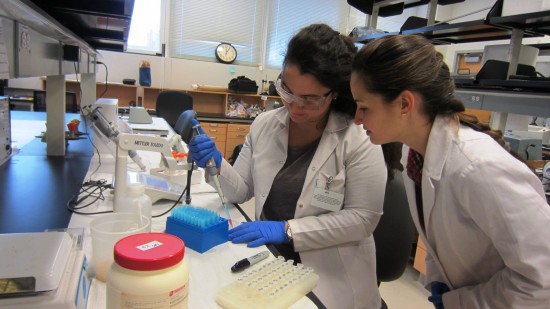
You will most likely be shadowing someone in the lab. Even before you come in, your PI’s will have most likely paired you with someone working in the lab, either an undergraduate student, PhD student, or postdoctoral researcher. This is your direct mentor. After you’ve gotten orientated around the lab, they will take you to meet your direct mentor (or maybe they’re the one who gave you the tour) and they will explain their project to you. They will have experiments already running, so you’ll most likely be following them around and helping them out with different parts (ex. learning to pipetting their solutions, plate bacteria, incubate cells, etc.).

For the first few weeks, you’ll only be helping out. You’ll shadow your mentor for a few weeks until you get comfortable being independent around the lab and doing various aspects of an experiment, at which point you’ll transition into your own independent project. It will most likely be a subproject of your mentor’s, who’s probably working towards their PhD or any type of thesis project.

Remember, each lab has their own environment, culture, and rule set. If you’re unsure about anything, do not be afraid to ask questions! Your mentors will want to see that you’re not afraid to ask for help and that you’re intellectually curious. Always ask why!

– Scientia Research writer

Congratulations, and good luck!

Categories
guides

Cold emailing 102: I’ve sent the email, now what?

Now, you wait for their response. Cold emailing will often have a very low response rate, so it’s best to stay patient and see who responds.

After a few days of waiting and there’s still no response, here’s what you can do.

1. No response – following up

If your professors still haven’t responded after 1.5-2 weeks, then you can send a follow up email. Sending a follow-up email is essential because it demonstrates your continued interest and shows that you value the opportunity and are committed to the lab. Note that follow ups are generally on the shorter side and much more concise.

Here’s an example template:


Dear [Professor’s Name],

I hope this email finds you well! I remain enthusiastic about the possibility of contributing to your ongoing research projects, and would like to follow up on my previous email regarding a position at your lab.

I wanted to take this opportunity to reiterate my interest in joining your research team. I am eager to immerse myself in the research environment of your lab and apply my skills in [mention any relevant techniques or methodologies you possess]. I am more than willing to provide any additional information you may require, such as references or further details on my research experiences.

Thank you for your consideration, and I hope to have the opportunity to discuss my potential contribution to your lab in person or through a virtual meeting.

Best regards,

[Your Name] [Your Contact Information – Email Address, Phone Number]


2. Followed up, no response – now what?

If after another 1-2 weeks or so and you still haven’t gotten a response, then leave it be. It’s best not to send more than one or two—professors do check their email, and if they haven’t responded after your initial email and a follow up, then chances are they’re not interested.

In the meantime, take the time to do more research and email other professors. Consider applying for official university-affiliated programs or reaching out to other connections around you (including on social media).

Best of luck!

Categories
guides

Getting started in the lab: basic laboratory techniques

Starting in a lab: basic techniques to learn

Are you about to start in a lab, but want to be prepared? We got you! Whether you are a student starting your journey in the lab or an aspiring researcher seeking to enhance your skills, mastering basic laboratory techniques is essential. In this guide, we will provide step-by-step instructions for three fundamental laboratory techniques: pipetting, preparing solutions, and working with microorganisms. These basic techniques are applicable to almost all fields, but are used especially when working in life science.

1. Pipetting:

Pipetting is the art of accurately transferring small volumes of liquid. It is crucial for performing experiments that require precise measurements.

Step 1: Familiarize with Pipette Types: Understand the types of pipettes available, such as single-channel and multi-channel pipettes, and ensure they are calibrated and in good working condition.

Step 2: Assemble the Pipette: Attach the appropriate disposable pipette tip to the pipette shaft, making sure it fits securely.

Step 3: Set the Volume: Use the volume adjustment dial to set the desired volume, ensuring it matches your experimental needs. All pipettes, since they’re in small volumes, will be in microliters (uL).

Step 4: Pipette Liquid: There are two “stops” in a pipette, which you will be able to feel. Press the plunger to the first stop, then slowly release to draw up the liquid into the pipette. Place the tip into the destination container and slowly press down the plunger to dispense the liquid. Pressing down the second stop will allow any extra liquid still stuck in the pipette to come out.

Step 5: Eject the Tip: Press the plunger on the other side of the pipette to dispose of the used pipette tip into a designated waste container, being careful not to contaminate other surfaces.

Remember: pipette tips are sterile, which means that if you accidentally touch a surface that’s not your solution or designated container, then you must discard the pipette and use a new one.

2. Preparing Solutions:

Accurate and precise preparation of solutions is critical for reproducible experimental results.

Step 1: Gather Materials: Assemble all necessary materials, including the solute (solid or liquid to be dissolved), solvent (liquid in which the solute is dissolved), and appropriate containers.

Step 2: Calculate Amounts: Calculate the amounts of solute and solvent needed based on the desired concentration and final volume of the solution. Concentration/molarity calculations usually use the concentration formula:

C1V1=C2V2

Step 3: Weigh or Measure Solute: Weigh the solid solute using an analytical balance or measure the liquid solute using a graduated cylinder or pipette.

Step 4: Mix Thoroughly: Add the solute to the solvent in the appropriate container and mix thoroughly using a magnetic stirrer, vortex mixer, or by swirling the container.

Step 5: Adjust pH or Volume (if required): If necessary, adjust the pH or final volume of the solution using appropriate techniques and reagents.

Step 6: Label and Store: Properly label the solution with its name, concentration, and date of preparation. Store it according to the required conditions, such as temperature and light exposure.

3. Working with Microorganisms:

Microorganisms are commonly used in research, and proper handling is crucial to avoid contamination and ensure safety.

Step 1: Sterile Techniques: Master sterile techniques, including proper handwashing, using a Bunsen burner to create a sterile work area, and using sterile equipment and media.

Step 2: Inoculation: Using a sterile inoculating loop or pipette, transfer the microorganism to the appropriate growth medium or experimental setup.

Step 3: Incubation: Place the inoculated medium or experimental setup in an incubator set to the appropriate temperature and conditions for the microorganism’s growth.

Step 4: Monitor Growth: Regularly monitor the microorganism’s growth, observing for any signs of contamination or other irregularities.

Step 5: Proper Disposal: After the experiment, properly dispose of any biohazardous waste, and follow lab safety guidelines for decontamination.

By mastering these basic laboratory techniques, you’ll enhance your research capabilities and ensure accuracy and reproducibility in your experiments. Remember to always adhere to laboratory safety guidelines and consult with experienced researchers or lab staff when learning new techniques! With practice and attention to detail, you’ll build a strong foundation for successful and meaningful scientific research. Goodluck!

Categories
guides resources

Navigating conferences and symposiums: tips for attending and presenting

Research conferences and symposiums bring together scientists, researchers, and scholars from diverse fields to share knowledge, present findings, and foster collaborations. Research conferences are larger events covering a broad range of topics with multiple presentations and diverse attendees. Symposia, on the other hand, are specialized, focused events with shorter durations, emphasizing in-depth discussions on a specific theme and attracting attendees with keen interest in that topic. Both provide valuable opportunities for knowledge exchange and networking among researchers and experts.

Presenting at a symposium can be an exciting and rewarding experience, offering an opportunity to showcase your research and receive valuable feedback. In this comprehensive guide, we’ll cover what to expect, how to prepare, essential oral presentation tips, and tricks to make your symposium presentation a success.

Understand the Symposium Format:

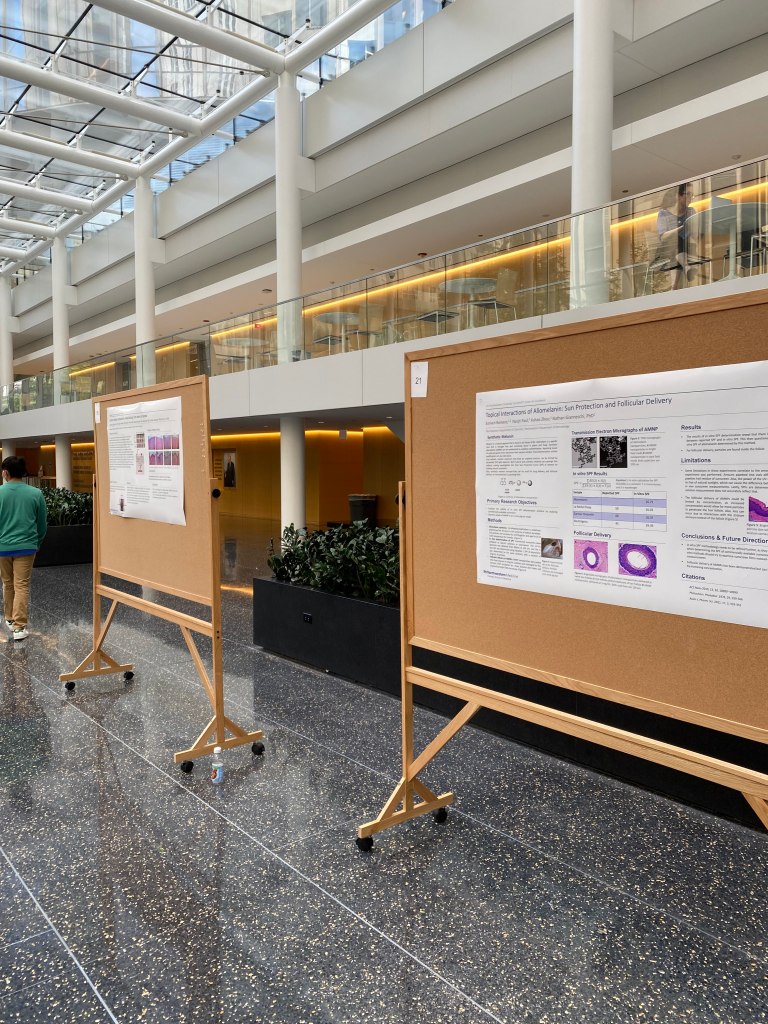
Familiarize yourself with the symposium’s structure, including the duration of your presentation, Q&A session, and any specific guidelines or themes set by the organizers. In a conference, you’ll usually be given a set duration of time. For a symposium, you are generally standing in front of your poster, and other people will come and ask questions.

Preparation is key:

  • Begin your preparation well in advance to have ample time for refining your content and polishing your delivery. Organize your thoughts, data, and key messages to create a coherent and impactful presentation. You generally will not have notes during your presentation, so make sure you fully understand your material before presenting.
  • Focus on conveying a clear and concise message. Structure your presentation logically, with a strong introduction, well-defined objectives, main findings, and a compelling conclusion.
  • Use visual aids like slides, graphs, and images to enhance your presentation and make complex concepts easier to understand. Keep the design clean, consistent, and avoid clutter.
  • Rehearse your presentation multiple times to become familiar with the content and improve your delivery. Practice in front of friends or colleagues to receive feedback. Remember to stay mindful of the allocated presentation time. Practice delivering your talk within the time limit to avoid rushing or exceeding the allotted time. For symposia, it’s generally good to have a few-minute elevator pitch.

Presenting:

  • Tailor your presentation to the symposium’s audience, which may include fellow researchers, scholars, students, and industry professionals. Adjust your language and level of technical detail accordingly.
  • Anticipate potential questions and prepare concise and accurate responses. Be open to feedback and engage in constructive discussions during the Q&A session.
  • Summarize your key points and reiterate the importance of your research. Leave a lasting impression by offering avenues for future research or applications.
A peek of one of our writer’s own symposium!

Other tips:

  • Networking Opportunities
    Take advantage of networking opportunities during breaks and social events to connect with other presenters, experts, and potential collaborators.
  • Enjoy the Experience:
    Remember that presenting at a symposium is a valuable opportunity to share your work and contribute to your field. Embrace the experience with enthusiasm and passion!

Goodluck!

Categories
guides

Applying to summer research programs: high school edition

What are high school research programs?

A high school summer research program is a unique opportunity for students to engage in hands-on research and exploration within their chosen academic fields. These programs are typically offered by universities, research institutions, and organizations. Summer programs are usually co-ed, residential programs that range anywhere from 6-8 weeks and often culminate in a final project or presentation. Participating in a summer research program demonstrates a student’s commitment to academic excellence and passion for their chosen field, making it a valuable addition to college applications. It can significantly enhance the chances of being accepted to competitive colleges and universities while offering a transformative experience that sets students apart from their peers. As exciting summer research programs as a high school student can be, most respected programs are often very competitive (think <10% acceptance rate). Here’s a guide on how to craft the best program application:

To start, most programs require the following:

  • Grades transcript
  • Test Scores
  • Letters of recommendation
  • Supplementary essays / personal statement
  1. Research Available Programs: Look for summer research programs at universities, research institutions, and organizations. Utilize online resources, directories, and databases that specifically cater to high school students seeking research opportunities.
  2. Check Eligibility Criteria: Each program will have specific eligibility requirements, such as grade level, age range, coursework completed, and GPA. Make sure you meet all the prerequisites before proceeding with the application.
  3. Start Early: Begin your search for summer research programs well in advance. Many applications have deadlines several months before the start of the program, so give yourself enough time to research and prepare. Most summer programs open their applications at the end of the year (Oct-Nov) and are due at the beginning of next year (Jan-Feb).
  4. Prepare Your Resume/CV: Create a well-organized resume that highlights your academic achievements, extracurricular activities, volunteer work, leadership experiences, and any previous research-related involvement. Some programs will ask for a resume, and some won’t. Make sure you know which programs ask and don’t ask to save time.
  5. Request Recommendation Letters: Many programs require letters of recommendation from teachers, mentors, or community leaders. Ask for letters from individuals who can speak to your academic abilities, research potential, and enthusiasm for learning.
  6. Write a Stellar Personal Statement: Craft a compelling personal statement that showcases your passion for the subject, explains why you want to participate in the program, and demonstrates your suitability as a candidate. Tailor your statement for each program you apply to. For those that ask for supplementary essays, make sure you start drafting and writing a few months before the deadline.
  7. Check for Financial Assistance: Some summer research programs may come with associated costs. If they do, they will also most likely offer financial aid or scholarships, so make sure to research what they offer.
  8. Submit Your Application: Complete the application accurately and submit all required documents before the deadline. Double-check that all materials, including transcripts, recommendation letters, and essays, are included.

Extra tips:

  1. Stay Organized: Keep track of the programs you’ve applied to, their deadlines, and any communication with program coordinators. An organized approach will help you manage the process effectively.
  2. Consider Backup Options: Apply to multiple programs to increase your chances of acceptance. Have a few backup options ready in case you’re not accepted to your first-choice program.
  3. Prepare for the Program: If you get accepted, familiarize yourself with the program’s schedule, requirements, and any preparations you need to make before the start date.
  4. Make the Most of the Experience: During the program, actively engage in research, ask questions, seek mentorship, and network with peers. Embrace the learning opportunities and make the most of the experience.
  5. Follow Up and Express Gratitude: After the program concludes, send thank-you notes to mentors, program coordinators, and anyone else who contributed to your experience. Networking and expressing appreciation can lead to future opportunities.
Categories
guides

How to look for summer programs

Here’s a guide on how to Google for summer research programs:

  • Look at colleges and universities. Almost any college/university will have their own research department, especially if they are an established research school. And if they have their own research department, then they will most likely have some sort of student program opportunity. All that do will most likely be geared towards undergraduate/graduate students, but high school programs are not uncommon.
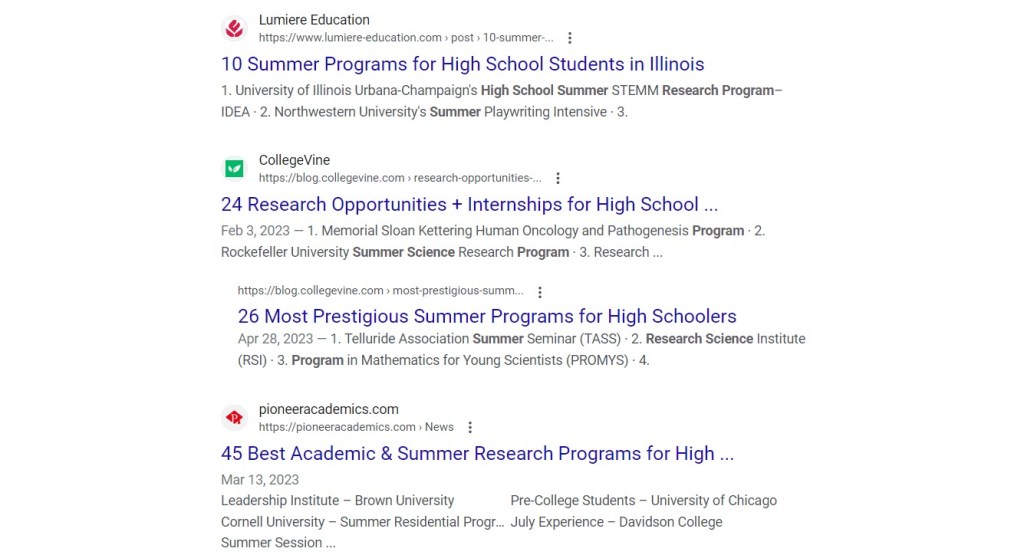
  • Google for pre-existing compiled lists. Most college preparation websites will have already compiled lists of top research programs, so know how to search for those lists. You can try using these phrases:
    • Top high school research programs
    • top high school summer programs
    • top high school summer research programs
    • [your city] summer research programs
    • best high school research programs for [your specific needs]
Results from searching “top high school summer research programs”
  • Use university-specific keywords. When googling for a summer program, use certain buzzwords that will help your results. Here are some words and phrases you can try searching:
    • [university name] high school research program
    • [university name] high school fellowship
    • high school research program
    • student research program
    • [university name] summer research program
    • [university name] high school research
    • [university name] student fellowship
    Note how all of these phrases generally contain “high school”, “research”, “summer”, “program”, “fellowship”, and “student”! Make sure to also include a university name because this will help narrow down your results and differentiate it from random, lesser-known programs.