
Overview
Mass spectrometry is a powerful analytical technique used to identify and analyze molecules based on their mass-to-charge ratio. It’s versatile and widely used analytical method in chemistry and biology that enables researchers to identify and quantify the composition of molecules present in a sample by measuring their mass-to-charge ratio. Mass spectrometry provides valuable information about the molecular weight, structure, and composition of various substances. It allows researchers to identify unknown compounds, study protein sequences, analyze metabolites, and determine the isotopic composition of elements. Mass spectrometry finds extensive applications in proteomics, metabolomics, pharmacology, environmental science, and forensic analysis. It plays a crucial role in drug discovery, biomarker identification, and studying complex biological systems.
Materials and Instruments in Mass Spectrometry:
To perform Mass Spectrometry, you’ll need several key components:
- Sample Preparation: The sample of interest is prepared, which may involve extraction, purification, or derivatization depending on the nature of the molecules being analyzed.
- Mass Spectrometer: The instrument used to measure the mass-to-charge ratio of ions formed from the sample.
- Ionization Source: A technique that converts the sample molecules into ions, which are then introduced into the mass spectrometer.
- Mass Analyzer: The part of the mass spectrometer that separates ions based on their mass-to-charge ratio.
- Detector: A component that detects and measures the ions’ abundance and generates mass spectra.
- Data Analysis Software: To interpret the mass spectra and identify the molecules present in the sample.
Basic Steps in Mass Spectrometry:
Here’s a simplified outline of the Mass Spectrometry process:
- Ionization: The sample is ionized using one of several ionization techniques, such as Electrospray Ionization (ESI) or Matrix-Assisted Laser Desorption/Ionization (MALDI).
- Mass Separation: The ions are accelerated into the mass analyzer, where they are separated based on their mass-to-charge ratio.
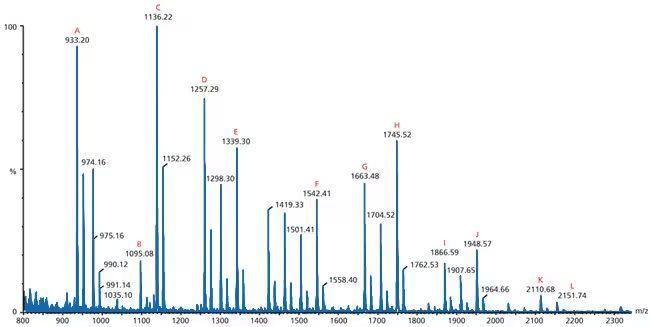
- Detection: The detector records the abundance of each ion, generating a mass spectrum that represents the different ions’ masses and intensities.
- Data Analysis: The mass spectrum is analyzed using specialized software to identify the molecules present in the sample based on their mass and fragmentation pattern.
- Quantification (if applicable): In quantitative mass spectrometry, the abundance of specific molecules is measured and related to their concentrations in the sample.
Its versatility and sensitivity have made it an indispensable technique in modern scientific research, driving discoveries in fields ranging from medicine to environmental science.
 Scientia Research