
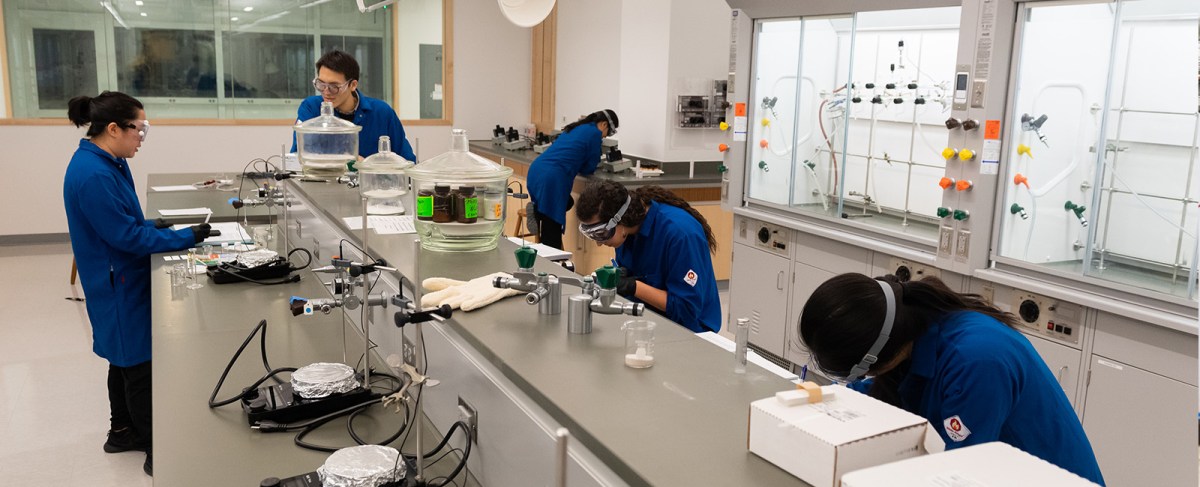
What is the study of chemistry?
Chemistry is the scientific study of matter, its properties, composition, and interactions, encompassing various subfields that explore the fundamental principles governing the behavior of atoms and molecules.
Key subtopics in chemistry include organic chemistry, inorganic chemistry, physical chemistry, analytical chemistry, biochemistry, and materials chemistry. Organic chemistry investigates the structure, properties, and reactions of carbon-based compounds, which form the basis of life and numerous synthetic materials. Inorganic chemistry explores the properties and behavior of inorganic compounds, including metals, minerals, and coordination complexes. Physical chemistry focuses on the application of physics to understand chemical processes, such as thermodynamics, quantum mechanics, and kinetics.
Analytical chemistry involves the techniques and methods used to analyze and characterize substances, enabling scientists to identify the components of complex mixtures and determine their concentrations. Biochemistry delves into the chemical processes within living organisms, studying biomolecules like proteins, nucleic acids, and enzymes. Materials chemistry investigates the design and properties of new materials with applications in technology, nanotechnology, and energy storage.
Some notable figures
Throughout history, influential figures have significantly contributed to the field of chemistry and its understanding of the natural world. Antoine Lavoisier’s work on the law of conservation of mass and the development of the modern chemical nomenclature laid the groundwork for modern chemistry. Dmitri Mendeleev’s development of the periodic table organized chemical elements based on their properties and paved the way for understanding the relationships between elements.
Some notable figures
Chemistry has witnessed significant breakthroughs that have transformed various industries and our understanding of the molecular world. The development of polymer chemistry has revolutionized the production of plastics and synthetic materials, impacting modern life and industry. Advances in medicinal chemistry have led to the discovery of life-saving drugs and improved medical treatments. Nanotechnology has opened new frontiers in materials science, electronics, and nanomedicine.
What does it take?
Conducting chemistry research requires a combination of experimental techniques, theoretical modeling, and data analysis. Chemists synthesize and manipulate compounds in the laboratory, using sophisticated instruments to characterize molecular structures and properties. Theoretical chemists use mathematical models and computational methods to predict chemical behavior and explore molecular interactions.
 Scientia Research